
Stats 101: Not All Missed Greens Are Created Equal
You miss the green and fail to get up and down. Your playing partner misses the green and gets up and down. It feels like a short game issue. But was it really?
One of the biggest misconceptions in golf is that every missed green creates the same challenge. In reality, the quality of your approach shot often determines how difficult the next shot will be.

Three Different Short Game Shots
Imagine three golfers who all miss the green from 140 yards.
Golfer A misses pin-high with plenty of green to work with.
Golfer B misses on the edge of the green and has a straightforward chip.
Golfer C misses short-sided, leaving almost no green between the ball and the hole.
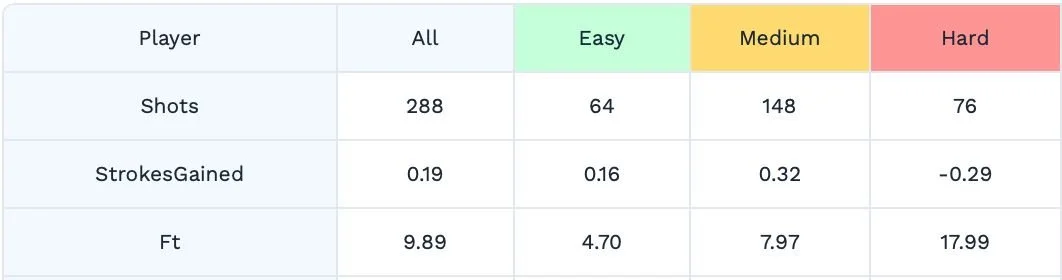
All three players technically missed the green, but they are facing completely different challenges. This is why Upgame classifies short game shots as Easy, Medium, or Hard. The category isn’t determined by whether you get up and down. It’s determined by how difficult the shot was to begin with.
What Does “Short-Sided” Mean?
A player is short-sided when they miss the green on the same side as the flag, leaving very little green to work with. Imagine the pin is tucked just over a bunker on the right side of the green. If you miss right, you’re left with a difficult shot that has to fly the bunker and stop quickly. If you miss left, you may have 30 yards of green to use. The second shot is dramatically easier, even though both players missed the green. This is one reason good players don’t just aim at flags. They think about where their misses will leave them.
Your Approach Shot Creates Your Short Game Shot
Many golfers evaluate their short game based solely on outcomes.
“Did I get up and down?”
But a better question is:
“What type of opportunity did my approach shot leave me?”
A player who repeatedly leaves themselves hard short game shots may have a stronger short game than their statistics suggest. Another player may have excellent up-and-down numbers because they consistently leave themselves simple chips and pitches. Without understanding the difficulty of each shot, it’s easy to draw the wrong conclusions.
Why Difficulty Matters
Let’s compare two players:
Player A gets up and down 40% of the time.
Player B gets up and down 35% of the time.
Most golfers would assume Player A has the better short game. But what if Player A faced mostly Easy shots while Player B faced significantly more Hard shots? Suddenly the picture changes. Difficulty provides context. The best short game statistics don’t just measure results. They measure results relative to the challenge presented.
What To Look For In Your Data
When reviewing your rounds, don’t focus only on your overall up-and-down percentage.
Instead, ask:
● How many Easy, Medium, and Hard short game shots did I face?
● Am I creating difficult recoveries with poor approach misses?
● Am I consistently short-sided?
● Which shot difficulty category gives me the most trouble?
Often, improving your short game starts long before you reach the short game area. It starts with smarter approach shots.
The Takeaway
A missed green doesn’t automatically mean a poor shot. Likewise, a failed up-and-down doesn’t automatically mean poor short game performance. The best players understand that approach play and short game performance are closely connected. The quality of your miss often determines the difficulty of the recovery. Understanding that difference is the first step toward making better decisions, interpreting your stats correctly, and lowering your scores.