
Aiming At The Flag Is Costing You Shots - Here’s Why
Upgame Diamonds
Stand on a Par - 3 with a right pin and the instinct for most players is simple. Aim at it. The flag feels like the obvious target. But when you look at how shots are actually hit, that instinct does not always hold up.
Every player has a pattern. Some miss slightly right. Some miss left more often than they realise. Some tend to go long. These tendencies are consistent. They do not change based on where the pin is. What changes is how the player chooses to aim.
This is where most decisions break down. A player with a natural right tendency aiming at a right pin is not making a bad swing. They are just bringing their most common miss directly into play. The outcome is shaped before the swing is even made.
From Guessing to Seeing

Upgame’s Diamonds feature changes that.
It turns your shot pattern into a clear, visual target, so you can see exactly where to aim and why.
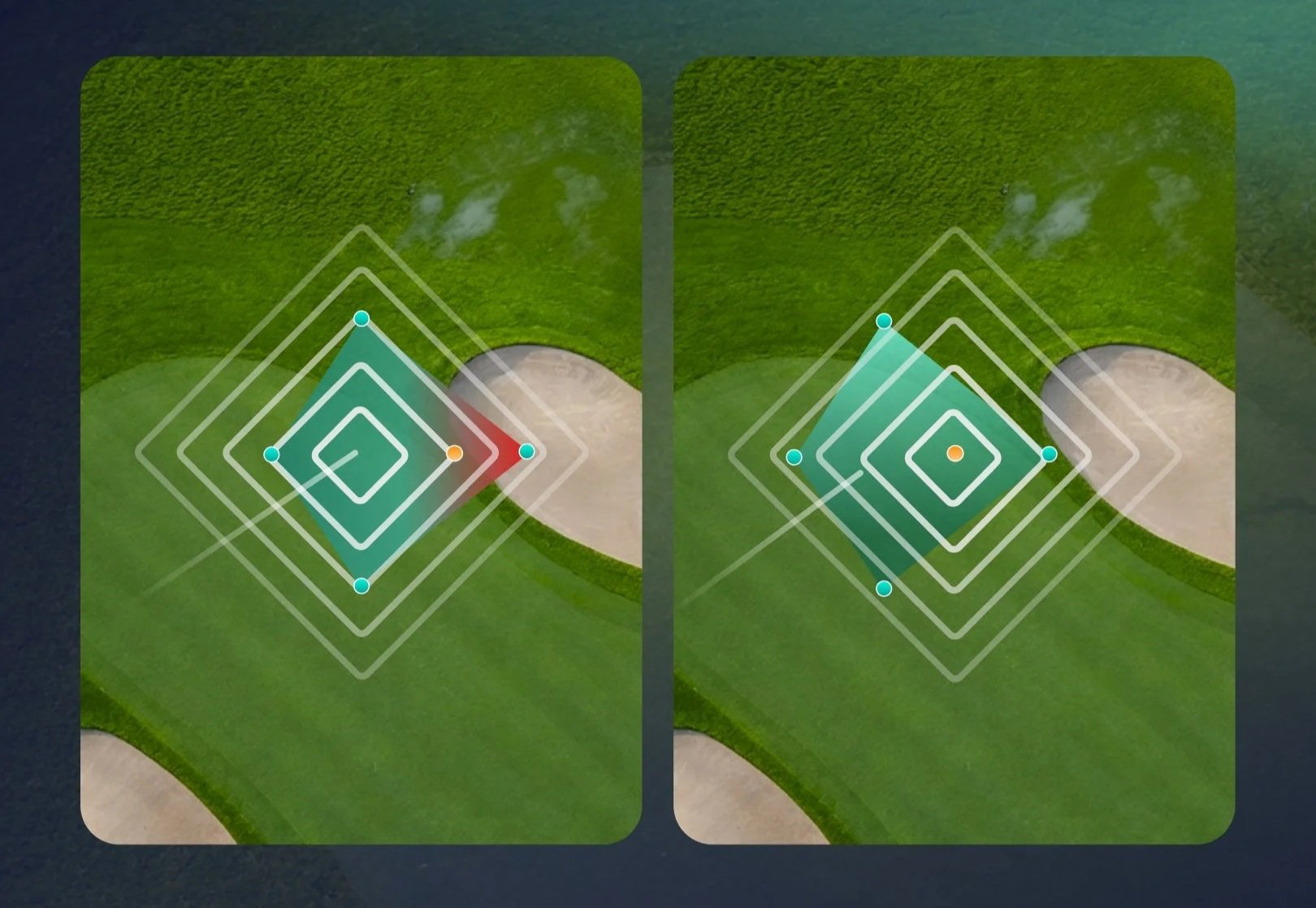
Instead of guessing where your ball might finish, you see it. Diamonds take your shot dispersion and maps it directly onto the green. Once a pin position is set, your data is applied to that exact situation. Your pattern appears as a shape, showing where your shots are most likely to finish relative to your target.
This is where the shift happens. You are no longer aiming based on how the hole looks. You are aiming based on how you actually hit the ball.
Understanding and Adjusting Your Pattern
At the center of this is your dispersion shape. The shape represents your tendencies. Not your perfect shots, but your real pattern over time. It shows the spread of outcomes you bring into play with every swing. Once that shape is placed on the green, the relationship between your target and your pattern becomes clear.
From there, you can move the target and immediately see the effect. Aim directly at the pin, and part of your pattern may fall into trouble. Shift your target 5-10 yards, and the entire shape repositions. The center of your pattern can now work toward the pin, while your natural miss stays in a safer area.
The change is small, but the impact is significant. You are not making the shot more conservative. You are aligning it with reality. The swing stays the same, but the outcome improves because the starting line now fits your pattern.
Different Players, Different Decisions
This becomes even more evident when you compare players. Two players can stand on the same hole, looking at the same pin, and require completely different targets. One may favour a right miss, the other a left. Diamonds captures that difference.
Each player sees their own shape, built from their own data. The recommended target adjusts accordingly. If both aim at the flag, one may repeatedly bring trouble into play, while the other is perfectly positioned to attack. The hole has not changed. The correct decision has.
Pin position adds another layer. A left pin might allow a player with a right tendency to be more aggressive, as their pattern works away from risk. That same player, faced with a right pin, needs a more precise starting line. Not more caution. Just better alignment between target and tendency.
Before and After Diamonds
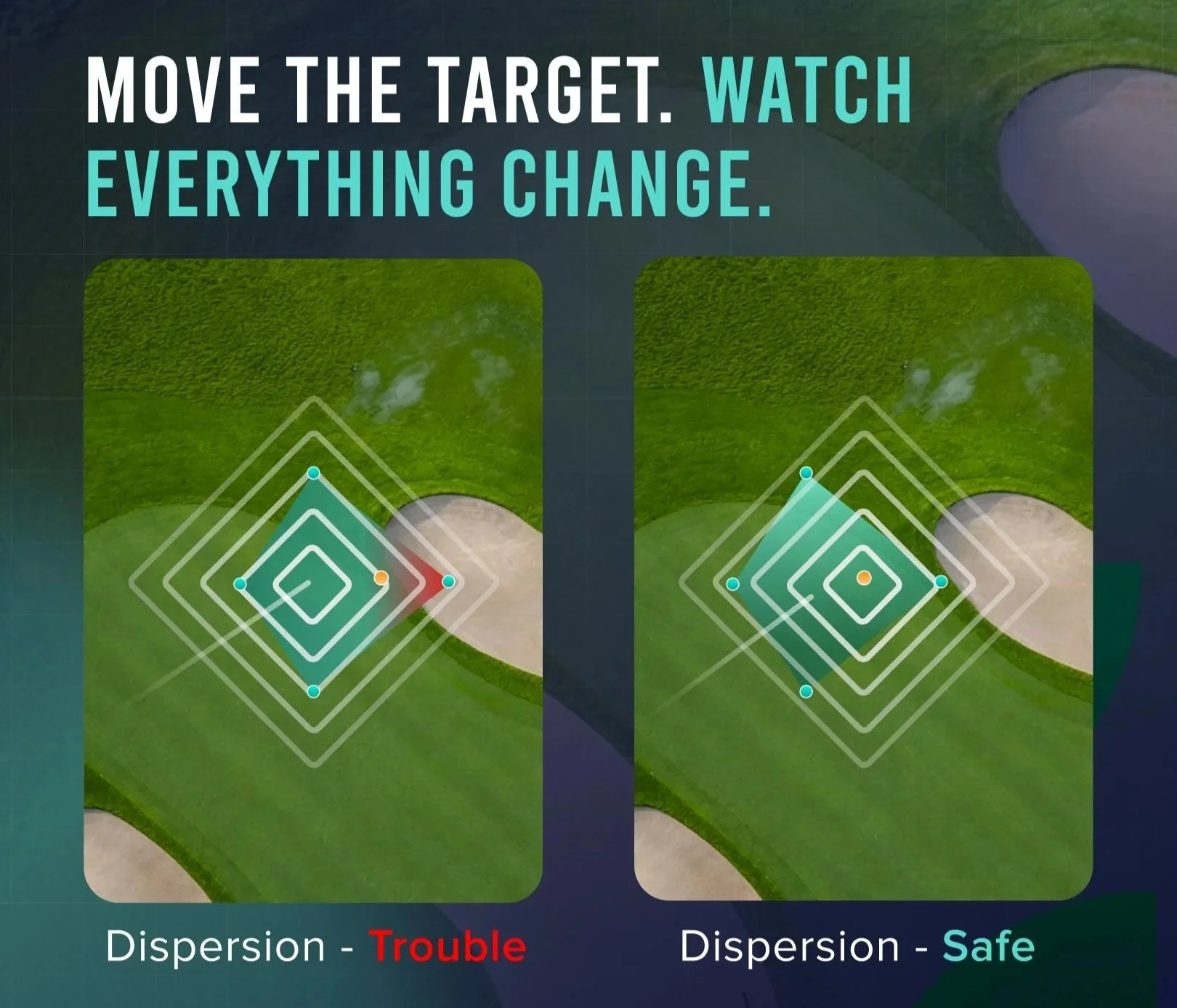
Before using Diamonds
● Aiming based on what the hole looks like
● Treating the flag as the default target
● Outcomes that feel inconsistent or unpredictable
After using Diamonds
● A target built around your actual shot pattern
● Clear visual understanding of where your misses go
● Small adjustments that keep your dispersion in play
The Real Shift
Over time, this is where better strategy separates itself.
It is not about playing safer or aiming further from the pin. It is about understanding how your pattern interacts with the target in front of you, and making small adjustments that consistently improve outcomes.
Diamonds make that process visible. It takes what your game is already doing and turns it into a target that fits it. Most players aim based on the hole. Better players start to aim based on their pattern. That shift is subtle, but it changes everything.