
Planning a Round Isn’t Guesswork Anymore
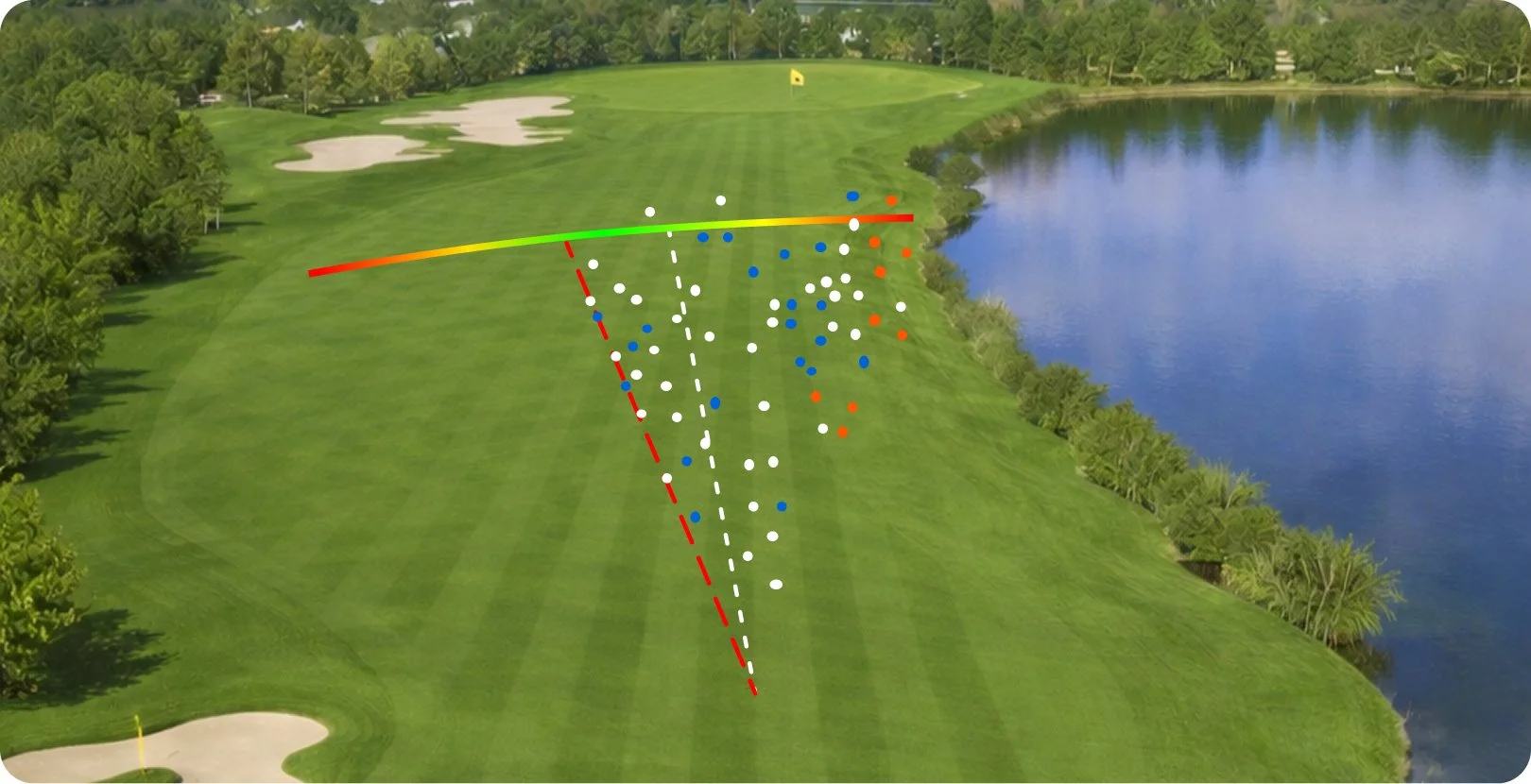
At a certain level, golf stops being about mechanics and starts being about decisions. Most of us spend hours working on swing changes. Very few spend the same time refining where we aim. And yet, over four rounds, target selection shapes scoring more than we realise.
Plan a Round is built around that idea.
It doesn’t tell you how to swing it better. It helps you position what you already have.
It Starts With Dispersion
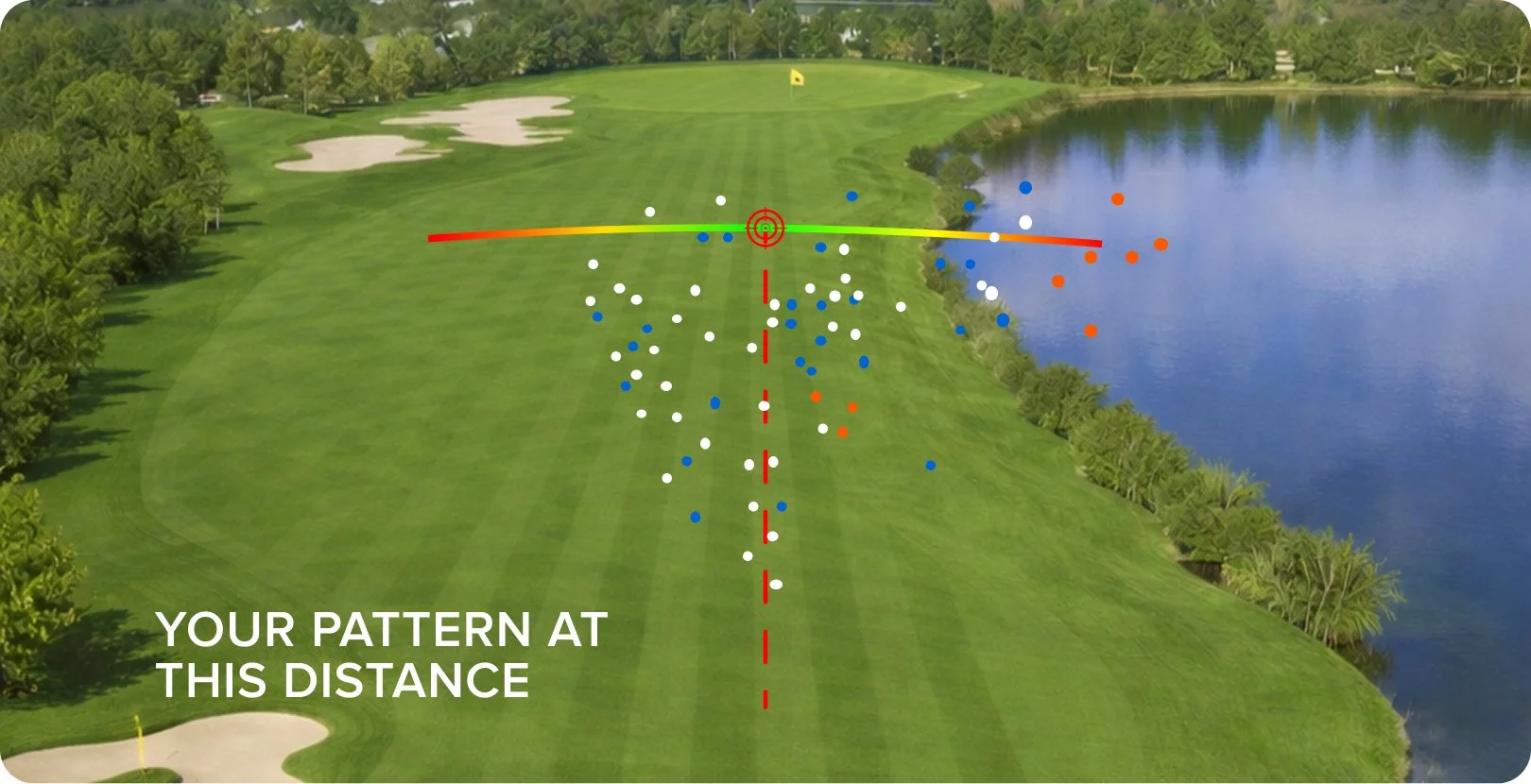
You set a target line on the hole.
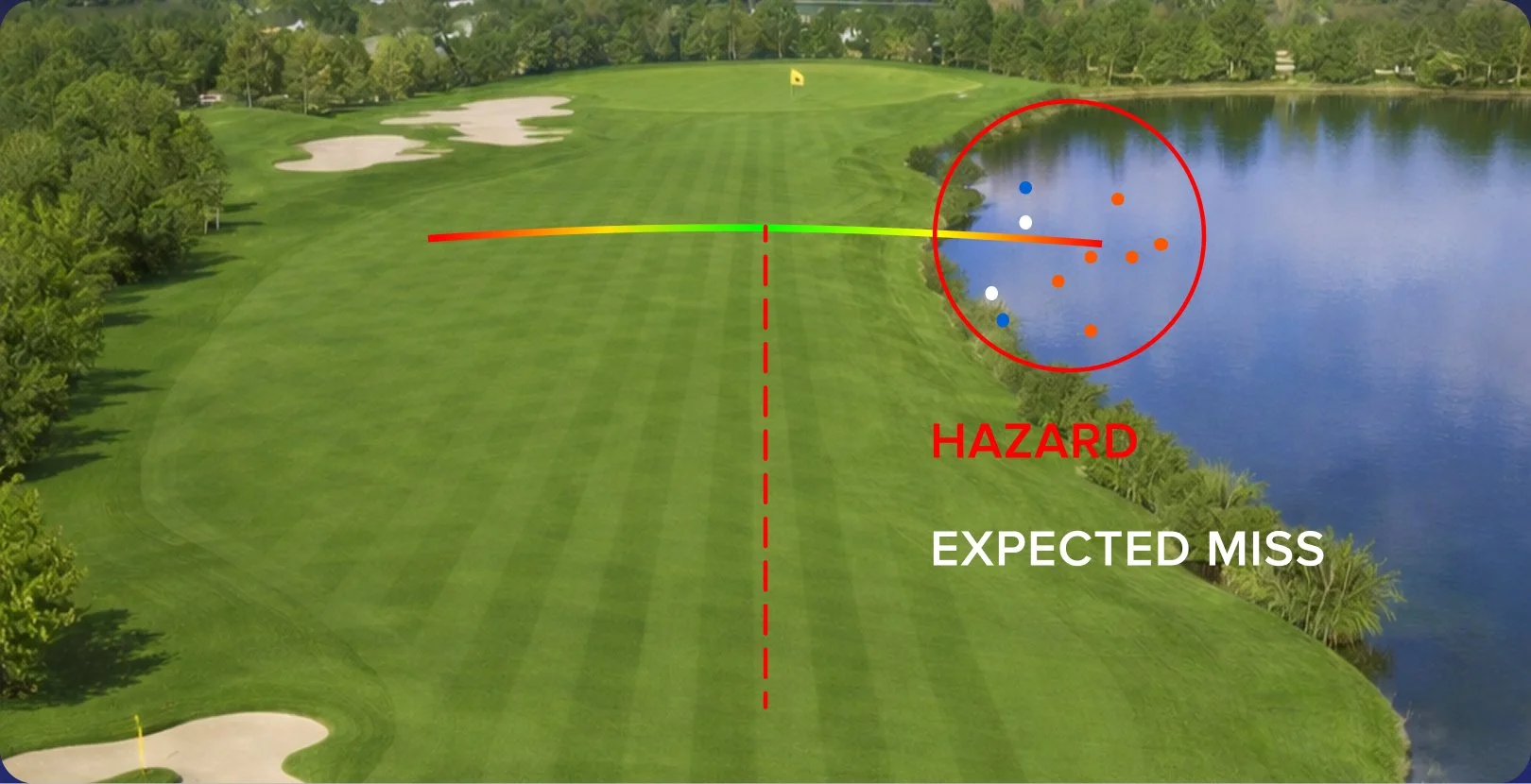
Immediately Upgame’s colour coded dispersion arc appears. A visual of how wide you tend to be at that distance, broken into 25, 45 and 65-yard windows. If your 45-yard window sits comfortably inside the fairway, that’s a percentage play. If part of it leaks into water or heavy rough, that result is predictable.
Move the target slightly and the entire probability shifts. Instead of guessing where to aim, you manage your dispersion rather than fighting it.
Seeing Your Pattern on the Hole
You can then overlay your actual shot pattern. Select the club. Choose the timeframe. Apply. Your previous shots appear directly on the hole.
You might notice something you have always suspected. A gentle right bias with the driver. Or that your approach shots tend to finish pin-high but slightly left. Or that long misses occur more often than expected.
It’s no longer about how you think you hit it. It’s about how you actually hit it.
And when that pattern sits over a specific hole shape, the best target often reveals itself.
Planning for a Course You Haven’t Seen
A new venue exposes how vague most strategy actually is. You don’t have memory to rely on. No emotional history with the hole. No past experience telling you what works.
That’s where Plan a Round becomes grounding.
Even if the course is unfamiliar, your dispersion and tendencies remain the same. Instead of reacting to visuals or defaulting to generic advice, you can place your target based on something measurable. You can see whether your normal window fits between hazards. You can adjust before you ever hit a shot. It gives structure to the unknown.
Using It on Courses You Know
On courses you’ve played many times, the advantage shifts slightly.
You can overlay your past results on a specific hole. Where your drives finished, where birdies were made and where bogeys came from.
Maybe every time you’ve driven it past a certain number on a par four, you’ve created better opportunities. Maybe laying back has produced fewer opportunities than expected.
For players who return to the same courses, college golfers, club players, tour professionals, this becomes incredibly powerful. You stop guessing what feels right and start choosing what has actually worked.
Smarter Approach Decisions
Imagine a tight pin cut on the right side of the green with water on the right.
If you aim directly at it, your dispersion shows a portion of your shots leaking into the hazard. The miss isn’t dramatic. It simply sits within your normal pattern. Move the target five yards left. Now your central pattern finishes safely on the green, your common miss is protected and your best shot still gives you a look.
Nothing about your swing changed. Only your starting line did.
The Difference
Everyone has dispersion and variance. The edge isn’t in pretending otherwise, it comes from planning around it. Plan a Round shifts strategy from feel to probability.
It helps you:
• Understand your dispersion at a given distance
• See your actual shot patterns
• Adjust targets based on evidence
• Make calmer decisions under pressure
You’re managing your pattern better than the field, and over time that’s where strokes are saved.